In the context of increasingly deep integration in higher education, Transnational Education (TNE) has become one of the strategic trends aimed at improving training quality and expanding international cooperation. On April 24, 2026, staff from the University of Banking Ho Chi Minh City (HUB) participated in a webinar on the topic “Positioning Transnational Education (TNE) in the higher education strategy: Readiness, partnerships and program development,” hosted by the British Council.
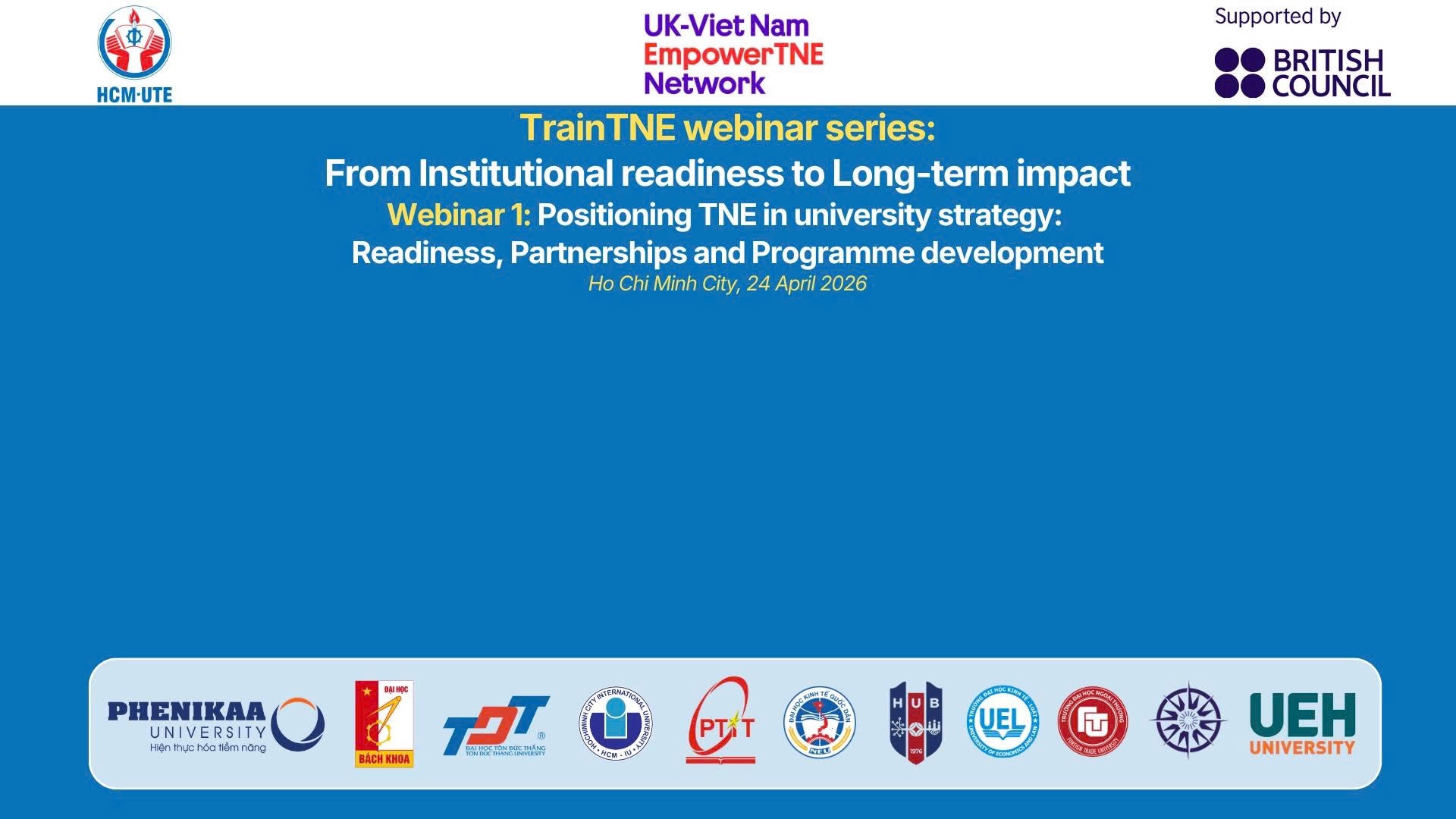 The program is part of the TrainTNE initiative under the EmpowerTNE project, supported by the British Council, aiming to share experiences in cross-border and international educational cooperation among universities. The program included representatives from domestic universities such as the National Economics University (NEU), Ho Chi Minh City University of Technology (HUTECH), Ho Chi Minh City University of Banking, etc., along with representatives from the British Council and experts in the field of education. At the webinar, speakers provided in-depth insights into positioning TNEs within the development strategies of higher education institutions. The content focused on experiences in implementing TNE programs at universities, key issues such as organizational readiness, policy and legal frameworks, international cooperation models, and the design and development of training programs suitable for a global context.
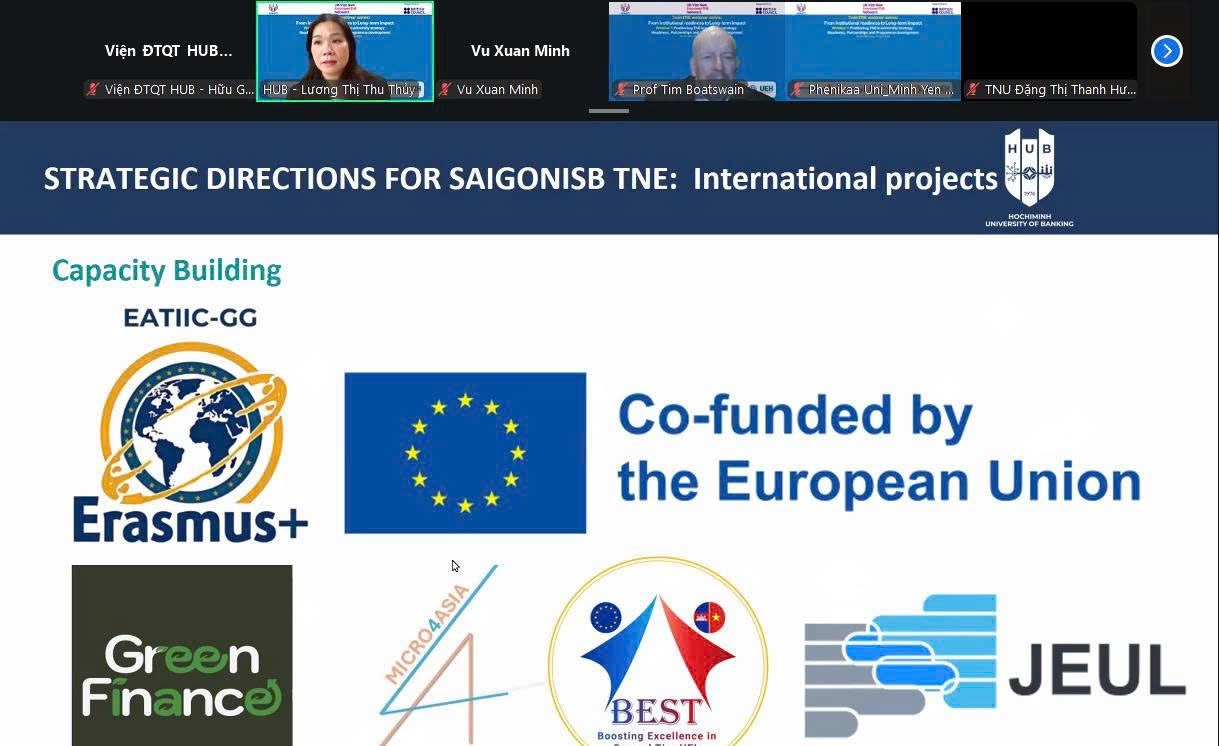
Representing HUB, Dr. Luong Thi Thu Thuy – Vice Director in charge of the SaigonISB International Training Institute – presented a paper on the journey of implementing transnational education at HUB. The presentation provided an overview of the university’s international training programs, including dual degree programs, international bachelor’s programs, and joint master’s and doctoral programs. Besides sharing achievements, Dr. Luong Thi Thu Thuy also analyzed the advantages and challenges in implementing international joint training programs, drawing lessons learned. In particular, the paper emphasized the crucial role of international cooperation strategies in shaping the direction and ensuring the quality of TNE programs. Actively participating in international education projects such as Erasmus+ Jean Monnet, JEUL, MICRO4ASIA, BEST, Green Finance, etc., is considered a crucial factor in helping HUB enhance its implementation capacity and expand opportunities for developing TNE programs. Through participation in these programs, HUB not only learns more about the experience of implementing transnational education programs but also updates itself on new trends in the internationalization of education. This is one of the concrete activities demonstrating the university’s commitment to improving the quality of training, promoting international integration, and gradually affirming its position in the modern higher education ecosystem.